Laser-assisted lipolysis applied to several areas of the body or a larger volume of fat in a single procedure, within a comprehensive medical plan and following the safety criteria recommended by plastic surgery societies.
Reviewed by clinicaobesidadenvejecimiento.com · Last review:

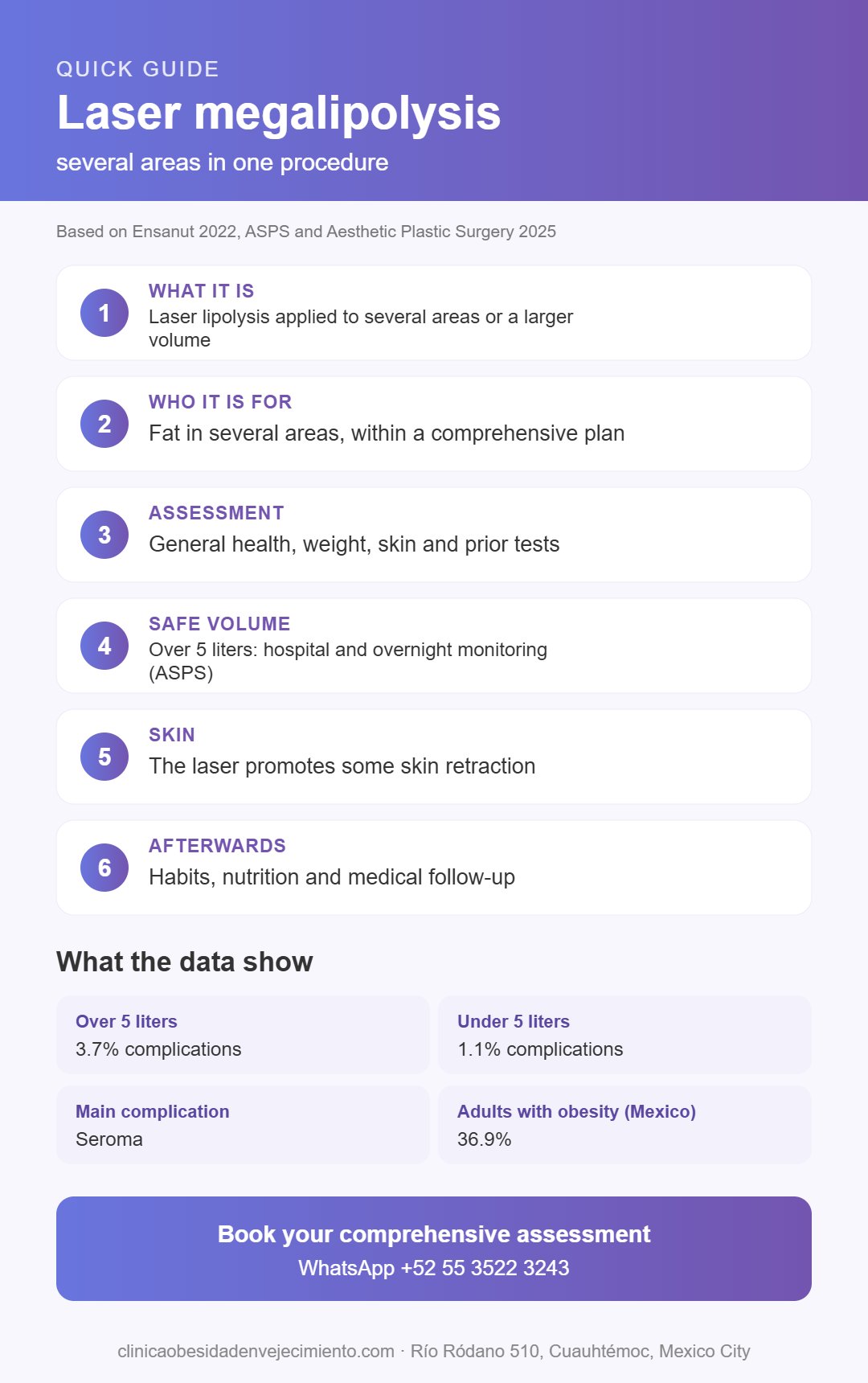
Laser megalipolysis is laser-assisted lipolysis that treats several areas of the body or a larger volume of fat in a single procedure. The laser liquefies fat and promotes some skin retraction. Because larger volumes are involved, it is planned with safety criteria: the American Society of Plastic Surgeons recommends that removal of more than 5 liters be done in a hospital setting with overnight monitoring. It works best as part of a comprehensive plan that includes habits and medical follow-up.
The Ensanut 2022 survey reports that 36.9% of adults in Mexico have obesity and 81% have abdominal obesity, with a higher risk of diabetes, hypertension and high cholesterol.
Megalipolysis contours the body, but the best results last when it is part of a plan that also addresses metabolic health.
General health, lab tests, and areas and volume to treat.
The area is infiltrated and strategically placed incisions are made.
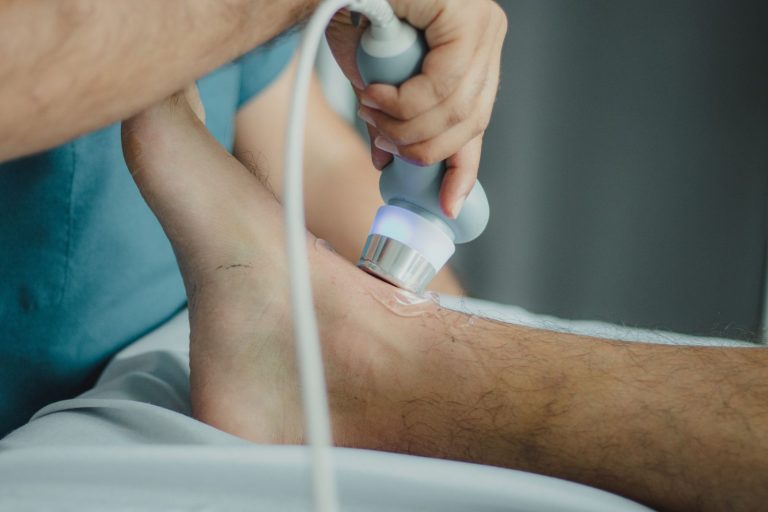
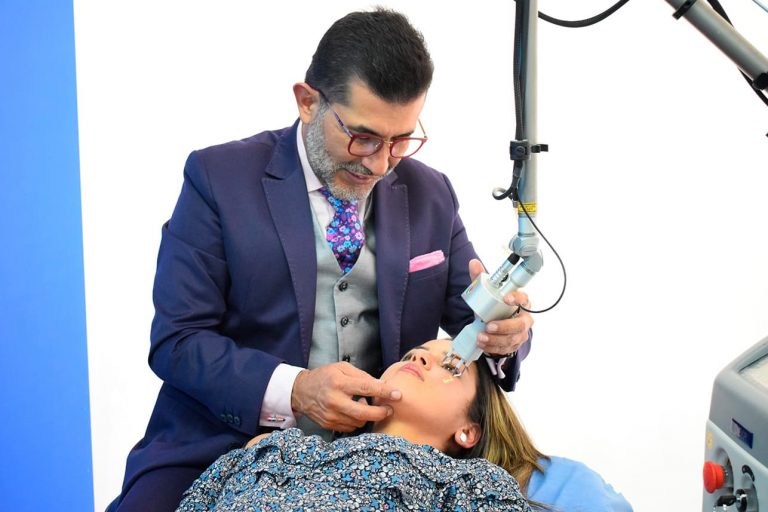
Laser energy liquefies fat in several areas and stimulates skin retraction.
The liquefied fat is removed and checkups and aftercare are scheduled.
The threshold above which the ASPS considers liposuction large-volume and recommends a hospital setting with overnight monitoring.
ASPS, executive summaryComplications above and below 5 liters in the ASPS registry; the difference was almost entirely due to seromas.
ASPS, 2015Laser assistance is associated with less bruising and faster recovery than the traditional technique.
Aesthetic Plastic Surgery, 2025The clinic’s scientific backing: the authors of the 2025 review on laser-assisted lipolysis published in Aesthetic Plastic Surgery include Dr. Gabriel Cubillos, scientific director of Clínica Obesidad y Envejecimiento.
| Risk | Why it happens | How it is controlled |
|---|---|---|
| Seroma | Fluid collection, more frequent with large volumes | Compression, drainage if needed and follow-up |
| Fluid shifts and anesthetic toxicity | Large infiltration volumes | Planned volume and monitoring according to the ASPS |
| Thermal burn | Laser energy | Parameter control during surgery (2025 review) |
| Irregularities | Uneven removal of fat | Technique and, if needed, a touch-up |
A 2026 review stresses the need for experience when using assisted technologies in liposuction.
“Megalipolysis is weight-loss surgery.”
It contours several areas; weight control requires a comprehensive health plan.
“The more fat removed, the better.”
The ASPS sets volume limits and monitoring to protect safety.
“The laser avoids any skin surgery.”
It promotes some retraction, but significant laxity may require another procedure.
“Results maintain themselves.”
Keeping them depends on diet, physical activity and follow-up.
It uses the same technology but treats several areas or a larger volume in a single procedure.
It depends on each patient; for safety, the ASPS recommends a hospital setting with overnight monitoring above 5 liters.
Yes, a medical assessment and lab tests to confirm the procedure is safe.
About 2 to 3 hours, depending on the areas.
The laser promotes some retraction, although it does not replace skin surgery in cases of significant laxity.
Checkups, compression garments and a habits plan to maintain the result.
Downloadable quick guide. The essentials of laser megalipolysis in one image: what it is, who it is for, safety criteria and what to expect.
Download infographic (PNG)Book a comprehensive assessment to plan the areas, the safe volume and the follow-up for your case.
Book an assessment on WhatsAppRío Ródano 510, Cuauhtémoc, 06500 Mexico City · +52 55 3522 3243