Medical care for people with complications from injected filler substances (liquid silicone, oils, paraffin, polyacrylamide). COFEPRIS, Mexico’s health regulator, considers them a high risk to health.
Reviewed by clinicaobesidadenvejecimiento.com · Last review:

Biopolymers, or filler substances, are unauthorized materials injected to add volume. They can cause inflammation, hardening, pain, skin changes and even damage to other organs, sometimes years later. Treatment starts with a medical assessment and imaging studies to locate the material. Depending on the case, it combines medical management with removal of the material in localized areas, supported by laser technology. Evidence shows that removing 100% is not always possible, so the goal is to control symptoms and safely remove as much material as possible.
Biopolymers are unauthorized filler substances that, once injected, can cause an inflammatory disease called iatrogenic allogenosis.
In 2023, COFEPRIS warned about non-absorbable filler substances used in cosmetic procedures: liquid or gel silicone, petroleum jelly, paraffin, polyacrylamide, vegetable or motor oils, guaiacol and beeswax, among others. The Mexico City Health Protection Agency also issued a risk notice.
Plastic surgeon Felipe Coiffman proposed the term iatrogenic allogenosis for the disease these materials cause in the body.
In the experience of the Hospital General de México, symptoms appeared anywhere from weeks to 30 years after the injection. Anyone who received these substances in the past should watch for any change.
Swelling, hardening, pain or skin changes in the injected area, and general symptoms, call for a medical assessment.
Symptoms described in the Hospital General de México series and in the COFEPRIS alert.
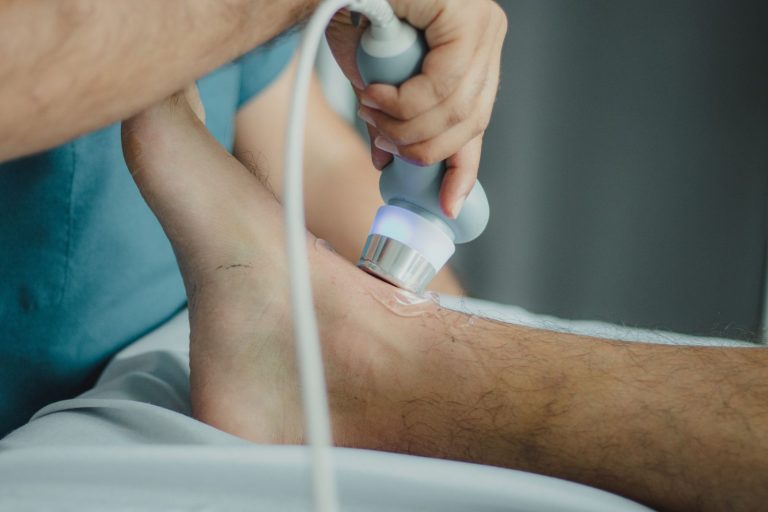
Treatment starts with an assessment and imaging, continues with medical management and, when appropriate, removal in localized areas.
Medical history: which substance, when and where it was applied, and current symptoms.
MRI shows the extent of the material and the affected tissue.
Control of inflammation and symptoms before any surgery.
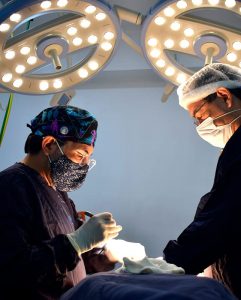
Removal of the material in localized areas, with laser support, and reconstruction when needed.
This is the approach described by the Hospital General de México: multidisciplinary care, with medical management as the foundation and surgery when the tissue is ready.
The evidence describes four options combined case by case: medical management, surgical removal, laser support and reconstruction.
| Option | When it is considered | Source |
|---|---|---|
| Medical management (anti-inflammatories and other drugs as needed) | Foundation of treatment to control inflammation | Hospital General de México, 2013 |
| Surgical removal of the material | Localized masses, when the tissue allows; sometimes in several sessions | Coiffman, 2008 · JPRAS Open, 2025 |
| Laser technology as support | As a tool during removal; published evidence on its specific use is limited | Systematic review, 2025 |
| Reconstruction with the patient’s own tissue | To correct depressions or defects after removal | Hospital General de México, 2013 |
These are the key data from published studies and guidelines on this treatment, with their source.
Patients operated on for filler-substance disease at the Hospital General de México under a multidisciplinary protocol.
Cir Plast Iberolatinoam, 2013Of patients had no complications after open gluteal removal in a series of 35 cases; the most frequent was seroma.
JPRAS Open, 2025Patients in a Latin American series that proposes treatment by clinical stage.
Cir Plast Iberolatinoam, 2022| Complication | Frequency | Source |
|---|---|---|
| Seroma (fluid collection) | 40% | JPRAS Open, 2025 |
| Wound opening | 28.6% | JPRAS Open, 2025 |
| Wound infection | 14.3% | JPRAS Open, 2025 |
In that series, infections resolved with oral antibiotics and seromas with drainage. There is also a staging system to classify the gluteal reaction and plan treatment.
COFEPRIS recommends:
“100% of the material can be removed.”
Not always. Coiffman recommends resecting only limited areas, and the goal is to remove what is safe and control symptoms.
“If it doesn’t hurt, nothing is wrong.”
Symptoms can appear decades after the injection, according to the Hospital General de México.
“They are safe if applied by someone experienced.”
COFEPRIS considers them a high health risk, regardless of who applies them.
“Laser melts and removes all the biopolymer.”
Laser is a supporting tool; published evidence on its specific use is limited and it is always combined with a full assessment.
If you ever had a substance injected to add volume outside a certified medical office, an assessment is advisable. MRI can locate the material.
Not always. It depends on the amount, the area and how it spread. The goal is to remove what is safe and control symptoms.
Usually an MRI of the area and lab tests, depending on the case, as described by the Hospital General de México.
Most often the buttocks, legs, breasts and face, where these substances are most commonly injected.
Yes. In a series of 35 patients, the most frequent complication was seroma, which resolved with drainage.
Get a medical assessment. COFEPRIS recommends seeing certified plastic surgeons.
Book a medical assessment to examine the area, locate the material with imaging and define the right plan.
Book an assessment on WhatsAppRío Ródano 510, Cuauhtémoc, 06500 Mexico City · +52 55 3522 3243