A technique that uses laser energy to liquefy localized fat before removing it. Scientific reviews describe it as a valuable complement to liposuction, with less bruising and faster recovery.
Reviewed by clinicaobesidadenvejecimiento.com · Last review:

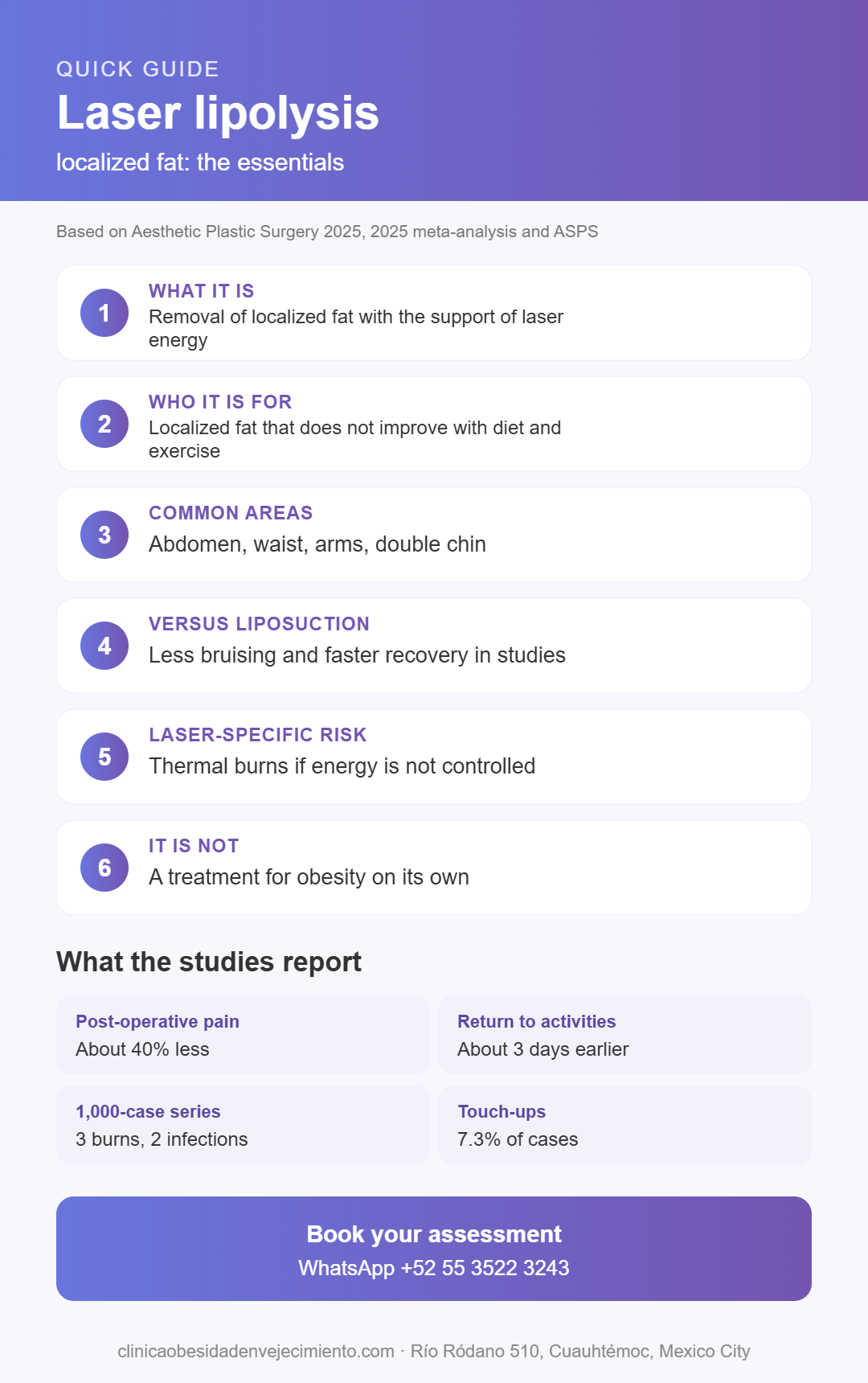
Laser lipolysis, or laser-assisted liposuction, inserts a laser fiber under the skin to liquefy localized fat, which is then removed through fine cannulas. According to a 2025 review in Aesthetic Plastic Surgery, it causes less bruising and pain and allows an earlier return to activities than traditional liposuction, although energy must be controlled to avoid burns. It is a body contouring procedure, not a treatment for obesity on its own.
According to the Ensanut 2022 survey by Mexico’s National Institute of Public Health, 38.3% of adults in Mexico are overweight, 36.9% have obesity and 81% have abdominal obesity.
Laser lipolysis does not treat obesity, but it helps contour areas of localized fat as part of a comprehensive health plan.
Areas to treat, skin quality, general health and expectations.
The area is infiltrated and small incisions are made.
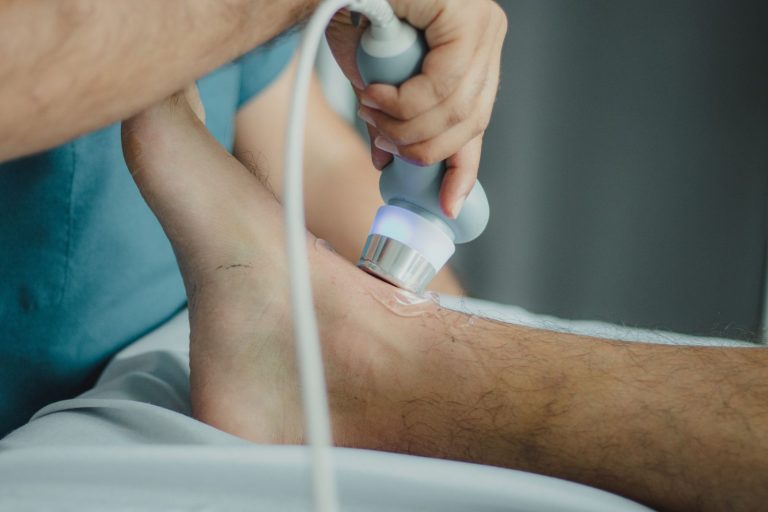
The laser fiber liquefies fat and stimulates skin retraction.
The liquefied fat is removed with fine cannulas.
Post-operative pain reported with laser compared with traditional liposuction, and a return to activities about 3 days earlier.
Aesthetic Plastic Surgery, 2025Of traditional liposuction patients had bruising lasting more than a week; in the laser group it was minimal.
Aesthetic Plastic Surgery, 2025Complications in a meta-analysis of laser lipolysis of the arms: temporary bruising and swelling.
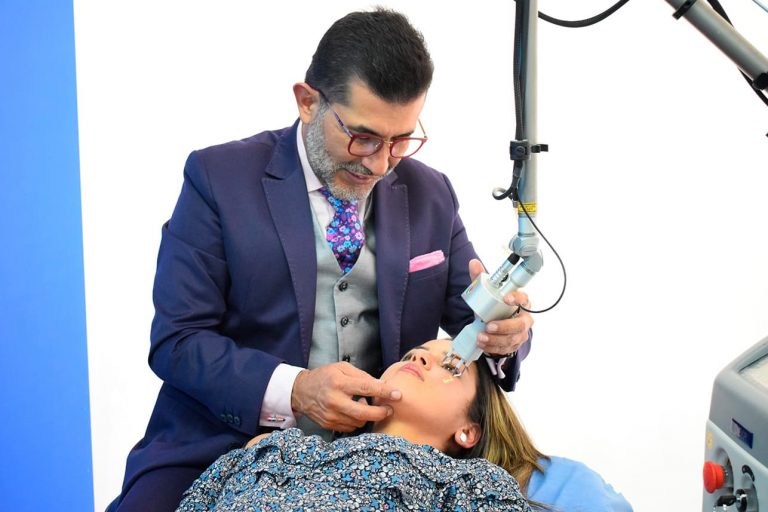
Aesthet Surg J Open Forum, 2025The clinic’s scientific backing: the authors of the 2025 review on laser-assisted lipolysis published in Aesthetic Plastic Surgery include Dr. Gabriel Cubillos, scientific director of Clínica Obesidad y Envejecimiento.
| Aspect | Laser lipolysis | Traditional liposuction |
|---|---|---|
| Bruising | Less and shorter-lasting | More frequent |
| Recovery | Faster in comparative studies | Slower |
| Skin retraction | Better skin appearance in studies | Less effect |
| Large volumes | Less indicated | Advantage and long-term safety profile |
| Specific risk | Burns if energy is not controlled | Irregularities, seroma |
Based on the 2025 review. A 2026 review notes that assisted technologies require experience to avoid complications.
In a series of 1,000 consecutive cases cited in the 2025 review, there were 3 burns, 2 infections, 1 hematoma and 1 seroma, with no major complications.
“Laser lipolysis is for weight loss.”
It contours localized fat; weight control requires a comprehensive health plan.
“With laser there is no risk at all.”
Laser energy can cause burns if not controlled, according to the literature.
“It always replaces liposuction.”
Authors describe it as a complement to liposuction, not a replacement in every case.
“The result is immediate and permanent.”
The contour takes shape as swelling subsides, and keeping it depends on habits.
Most often the abdomen, waist, arms and double chin; this is defined during the assessment.
It is performed under anesthesia. Studies report less post-operative pain than traditional liposuction.
About 2 to 3 hours, depending on the areas.
In comparative studies, about 3 days earlier than with traditional liposuction; the doctor advises in each case.
Studies show better skin appearance, although it does not replace skin surgery in cases of significant laxity.
Megalipolysis applies the same technology to several areas or a larger volume in a single procedure.
Downloadable quick guide. The essentials of laser lipolysis in one image: what it is, who it is for, how it compares with liposuction and its risks.
Download infographic (PNG)Book an assessment to find out whether laser lipolysis is the right option for your case.
Book an assessment on WhatsAppRío Ródano 510, Cuauhtémoc, 06500 Mexico City · +52 55 3522 3243