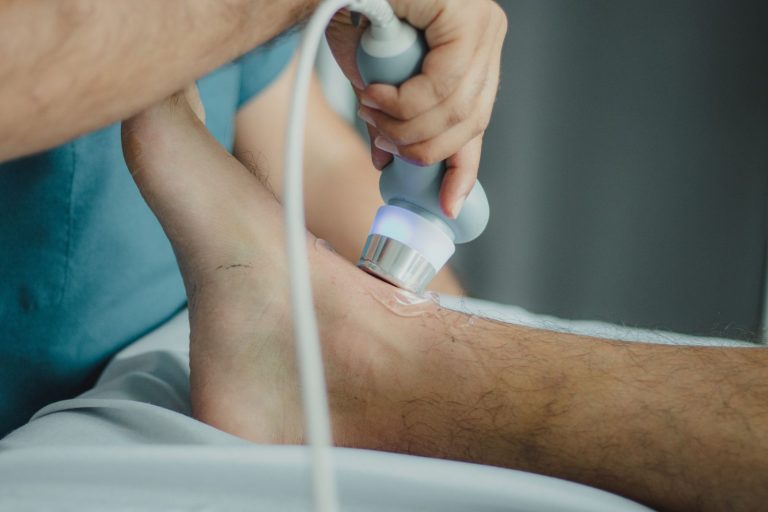
A minimally invasive treatment that closes the diseased vein from the inside, under local anesthesia and ultrasound guidance. International medical guidelines (NICE, ESVS) consider it the first choice when the patient is a candidate.
Reviewed by clinicaobesidadenvejecimiento.com · Last review:
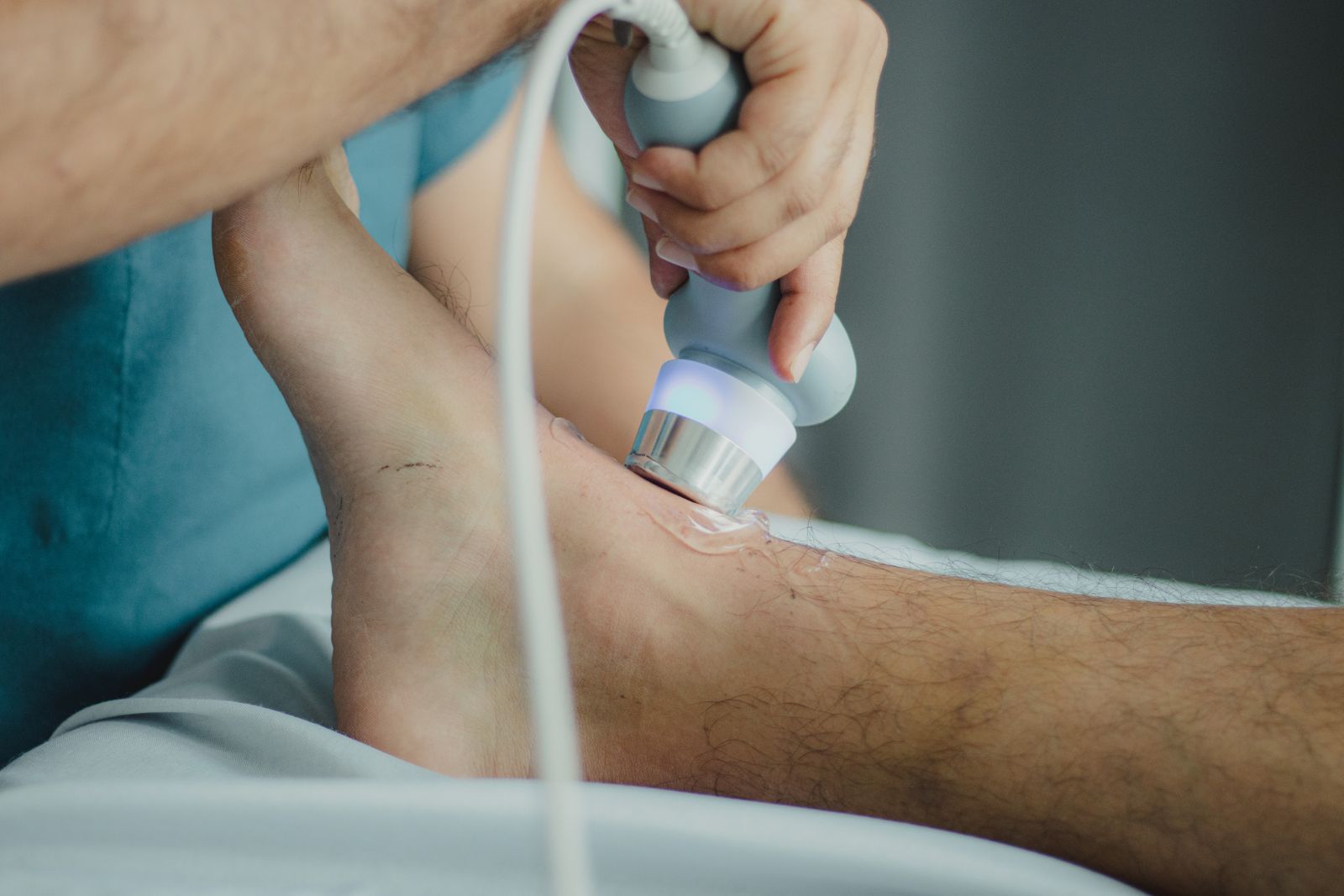
Endovenous laser is a treatment for varicose veins caused by a malfunctioning saphenous vein. A laser fiber inserted into the vein under ultrasound guidance heats and closes it, and blood is rerouted through healthy veins. It is performed under local anesthesia, usually without a hospital stay, and most patients return to their activities within a few days. Whether it is indicated always depends on a medical assessment with Doppler ultrasound.
Varicose veins are dilated veins that appear when the valves in the leg veins stop closing properly and blood flows backwards.
The IMSS Clinical Practice Guideline defines chronic venous insufficiency as a condition in which blood from the legs does not return properly to the heart because of changes in the vein walls and valves. Varicose veins are its most visible sign. In Latin America, a review in the Revista Mexicana de Angiología estimates a prevalence of about 20%.
Age, family history, standing for long periods, obesity, pregnancy and a sedentary lifestyle. It is more common in women (IMSS).
It is classified as endovenous thermal ablation, the same family as radiofrequency.
Duplex Doppler ultrasound and CEAP classification to confirm reflux and choose the technique.
Tumescent anesthesia is applied around the vein under ultrasound guidance.
The laser fiber heats the vein wall from the inside and seals it.
A control ultrasound confirms closure and rules out thrombosis.
It is indicated for people with saphenous reflux confirmed by Doppler ultrasound and symptoms or skin changes; some conditions need special assessment.
The IMSS guideline recommends duplex Doppler ultrasound for accurate candidate selection and states that these procedures should be performed in qualified units by trained surgeons.
These are the key data from published studies and guidelines on this treatment, with their source.
The NICE guideline ranks thermal ablation (laser or radiofrequency) ahead of foam and surgery.
NICE CG168 · ESVS 2022Mexican study, 2023: mild complications in about 20% and no cases of deep vein thrombosis or embolism.
Revista Mexicana de Angiología, 2023At 30 days in a Mexican study of 80 patients comparing laser and radiofrequency, with similar results.
Revista Mexicana de Angiología, 2021| Effect | Approximate frequency | Source |
|---|---|---|
| Bruising and discomfort along the vein | Common and temporary | Dermatologic Surgery, 2009 |
| Tingling or numbness (paresthesia) | 2.5% to 7.3% (small studies); 6.3% in the Mexican study | 2022 review · Rev Mex Angiol 2023 |
| Deep venous thrombotic events | About 1.7% (52 studies, over 16,000 patients) | Healy et al., 2018 |
| Pulmonary embolism | About 0.1% | Healy et al., 2018 |
Guidelines rank thermal ablation, such as endovenous laser, as the first choice; foam, surgery and stockings are kept for other cases.
| Option | Place in guidelines | For whom |
|---|---|---|
| Thermal ablation (laser or radiofrequency) | First choice | Saphenous reflux suitable on Doppler |
| Ultrasound-guided foam sclerotherapy | Alternative | When ablation is not suitable |
| Traditional surgery (stripping) | Third choice | When the above are not suitable |
| Compression stockings | Only if no treatment is possible | Relieve symptoms, do not correct reflux |
Based on NICE CG168 and ESVS 2022. Earlier versions of the Cochrane review concluded that laser, radiofrequency and foam are at least as effective as surgery.
Recovery is usually quick: patients walk the same day and most return to their activities within a few days.
Seek care immediately for severe pain or sudden leg swelling, shortness of breath or chest pain.
Venous relief measures recommended by the IMSS guideline:
“Laser removes varicose veins forever.”
It closes the diseased vein, but venous disease is chronic and new varicose veins may appear (NICE CG168).
“It is the same as traditional surgery.”
It avoids removing the vein and is usually done under local anesthesia; in the CLASS trial recovery was faster.
“Stockings cure varicose veins.”
They relieve symptoms but do not correct reflux; NICE reserves them for people who cannot receive treatment.
“It has no risks at all.”
It has uncommon risks, such as thrombosis or paresthesia, documented in systematic reviews.
It is performed under local anesthesia. Mild discomfort along the vein for a few days afterwards is common.
Usually not. It is an outpatient procedure and the patient walks out.
A venous Doppler ultrasound. The IMSS guideline also recommends classifying the disease with the CEAP scale.
Many patients do so within a few days; the exact time is set by the doctor for each case.
Yes. Venous disease is chronic, so regular follow-up is recommended.
Both are thermal ablations and guidelines rank them as the first choice. A 2021 Mexican study found no significant differences at 7 and 30 days.
Yes. Mexican specialists have published their experience in the Revista Mexicana de Angiología, with favorable short-term safety results.
The first step is a medical assessment with Doppler ultrasound to find out whether endovenous laser is the right option.
Book an assessment on WhatsAppRío Ródano 510, Cuauhtémoc, 06500 Mexico City · +52 55 3522 3243